
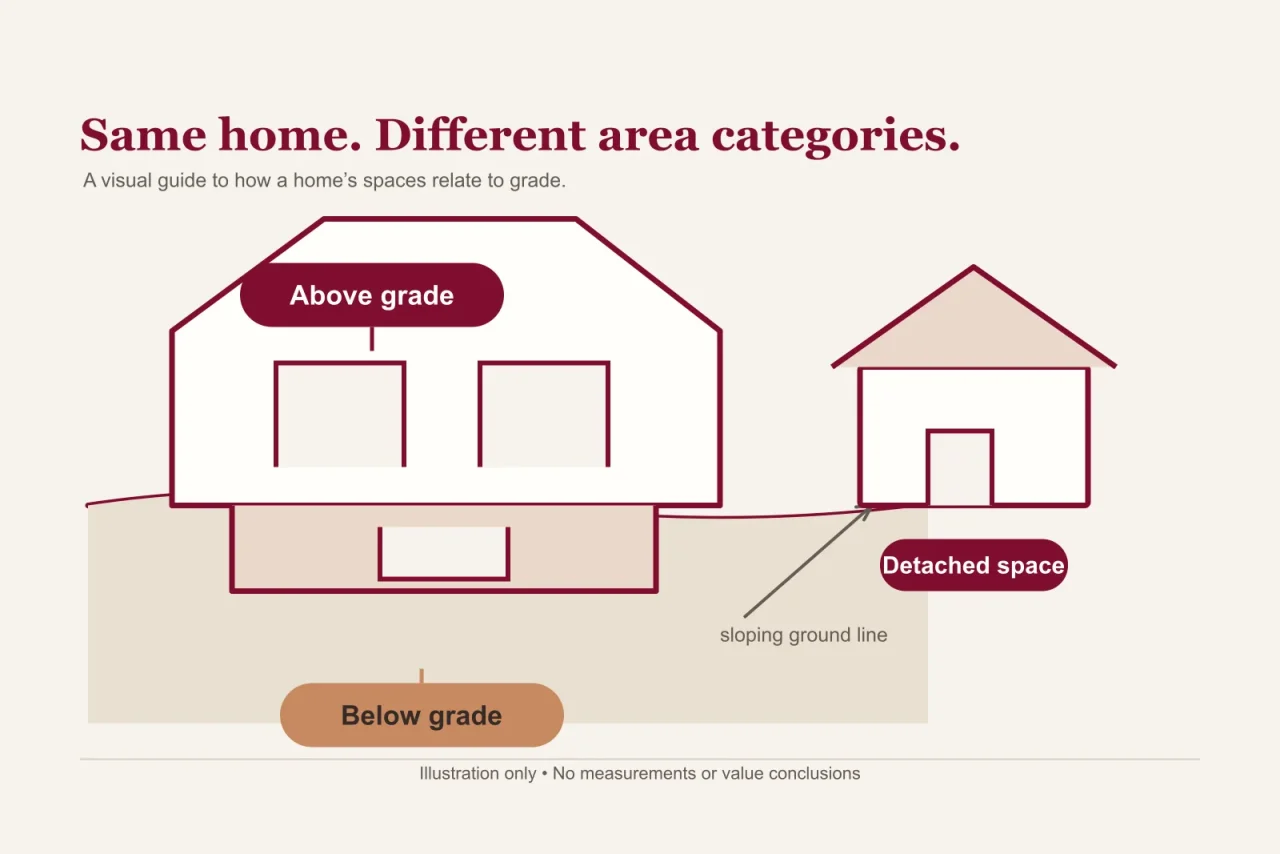
Different numbers may describe different spaces.
Your listing, assessor record, floor plan and appraisal may show different square footage. Before deciding which figure is wrong, check what each includes, when it was recorded and how it was measured.
One figure may include a finished basement; another may describe only finished space above ground. An older record may also predate an addition. Compare the same spaces and dates before treating the difference as an error.
Make a side-by-side comparison.
Use the appraisal sketch and records you already have. For each source, write down the date, area in square feet and description of the included space. Leave a question where the category is unclear.
| Source and date | Area and category | What to check |
|---|---|---|
| Appraisal and sketch Date: __________ | __________ sq ft Includes: __________ | Which levels and spaces are included? What date does the appraisal describe? |
| Assessor record or listing Date: __________ | __________ sq ft Includes: __________ | Does it include a basement, addition or separate building? |
| Plan or prior measurement Date: __________ | __________ sq ft Includes: __________ | Was it measured as built, drawn as a proposed plan, or copied from another source? |
For a date-of-death or other retrospective appraisal, distinguish the home as it existed on the value date from later work. Dated plans, permits, photographs and prior reports can help explain that history. See the estate appraisal preparation checklist.
Separately reported space can still have value.
For Fannie Mae appraisals of attached or detached single-family homes that require an interior and exterior inspection, and for hybrid appraisals, above-grade and below-grade areas are reported separately. A partially below-grade walkout level is treated as below grade under that program’s rule, even if it is well finished. Other property types may use different area conventions.
Some finished spaces with nonstandard characteristics, spaces without direct interior access, accessory units and detached structures may also receive separate treatment. Separate reporting does not mean that a space has no value. The ADU and in-law suite guide covers related questions.
These are program-specific examples. Applicable measurement and reporting requirements depend on the assignment. Lenders using UAD 3.6 must follow Fannie Mae’s current policy supplement, so report labels may differ from older forms.
Ask a specific question, with the supporting record.
- Identify the figure, source, date and category you question.
- Mark the space on a sketch or plan. Explain the suspected omission, duplication or category mismatch.
- Provide the relevant record and ask how the area was measured or reported.
- For a mortgage appraisal, follow your lender’s current correction or review process.
For a private appraisal, start with the person who ordered it. If you are the client, ask the appraiser about the specific item. A factual correction does not automatically establish a different value.
Two common questions
Does a smaller area figure prove the appraisal is too low?
No. First establish whether the sources describe the same space. Then ask about any supported discrepancy. Area is one part of the property analysis.
Can I multiply an area difference by the home’s price per square foot?
That calculation does not establish an appraisal adjustment. Fannie Mae requires adjustments to reflect market reaction rather than an unsupported rule of thumb. Relevant market evidence is needed.
Planning a private appraisal?
For an estate, divorce, purchase or sale in Red Oak Appraisals’ service area, request an appraisal quote. Include the address, purpose, relevant value date and any known area discrepancy. You’ll review the proposed work, fee and timing before deciding whether to proceed.
Already have a report? Start with the report-reading guide. Preparing for a visit? Use the appraisal preparation checklist.
Sources and scope
Official sources checked October 11, 2026. This guide explains common comparisons; it is not a measurement of your property or a determination of its value.
- Fannie Mae: Improvements Section of the Appraisal Report — reporting categories for covered appraisals.
- Fannie Mae: UAD 3.6 Policy Supplement — requirements for reports using UAD 3.6.
- Fannie Mae: Adjustments to Comparable Sales — market support for adjustments.