
An ADU does not create an automatic value premium
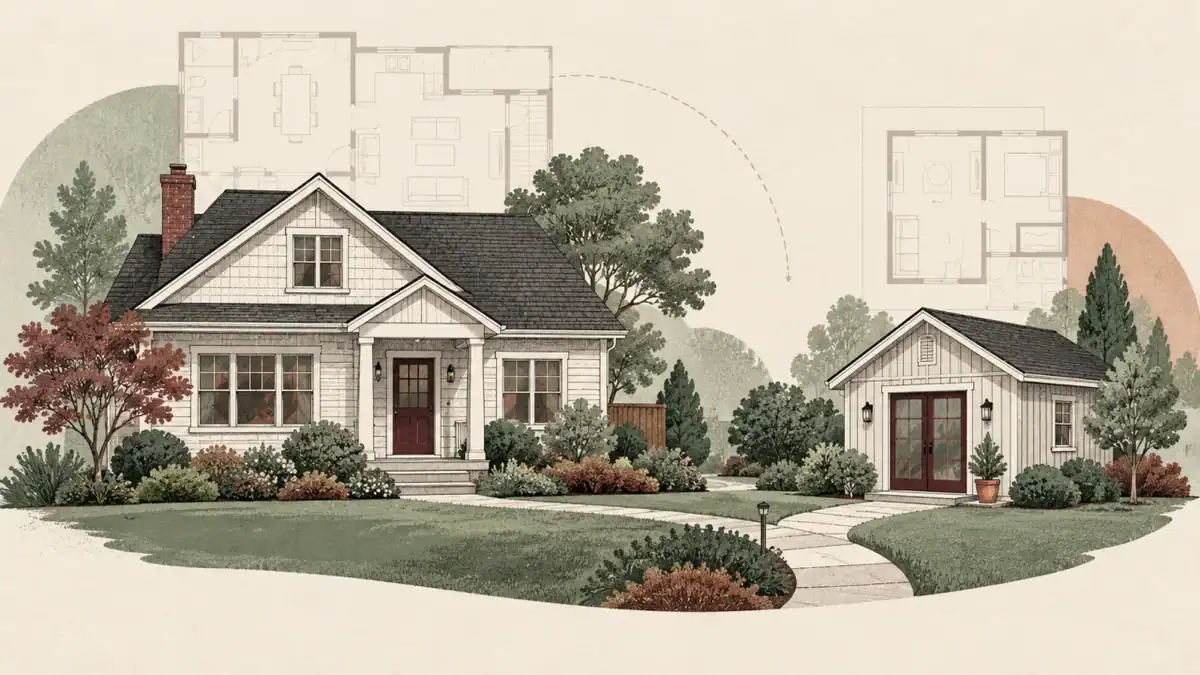
An accessory dwelling unit can add utility and may affect market value, but there is no standard dollar premium. The appraiser must first understand what the space contains, how it connects to the main home, whether it can function independently and how buyers in that market respond to similar properties.
The amount spent to build or renovate the space does not set its contribution. A finished area can be useful without qualifying as an ADU, and an ADU can require separate treatment from the primary dwelling in the appraisal report.
Identify what the space actually provides
Fannie Mae generally describes an ADU as an additional living area on the same parcel that provides independent facilities for living, sleeping, cooking and a bathroom. It may be within the home, attached to it or detached. Common labels such as in-law suite, guest house, basement apartment or carriage house do not settle the classification.
The appraiser may consider the entrance, interior connection, kitchen and bathroom facilities, privacy, utilities, postal address, rental use and relationship to the main dwelling. A detached room without the basic living facilities may be analyzed as an accessory structure instead.
Check local zoning and permits
Local rules control whether a use is allowed and which permits or occupancy approvals apply. Do not assume that an ADU allowed in one Missouri city is allowed on another property. The City of St. Louis, for example, adopted its own ADU rules and directs owners to its Zoning Section and Building Division. Other cities and counties can use different definitions and processes.
Ask the planning, zoning and building offices with authority over the property for current records and requirements. The appraiser reports known zoning and permit facts relevant to the valuation but does not issue a legal-use opinion, permit approval or promise that a lender will accept the property.
ADU area is not automatically finished above-grade area
Do not add every finished ADU square foot to the primary dwelling's finished above-grade square footage. Fannie Mae guidance says ADU living area is generally reported separately unless the ADU is contained within or part of the primary dwelling, has interior access and is above grade. Detached finished space, below-grade space and other noncontinuous areas can require separate reporting.
That reporting treatment does not mean the space has no value. It means the appraiser describes and compares it in a way that keeps unlike areas from being combined. Floor plans, measurements and photographs help establish the layout and relationship between the spaces.
Market evidence determines the contribution
Comparable properties with similar living arrangements can help show buyer acceptance and market reaction. When exact matches are scarce, the appraiser may consider older sales, competing areas, listings and other reliable data, then explain why the evidence is relevant.
Potential rent does not automatically equal added property value. Rental analysis, if part of the agreed work, depends on the purpose, client requirements and reliable rental evidence. A private appraisal also does not guarantee that a lender will use the report or count ADU income for underwriting.
Gather records that describe the space
Provide facts before conclusions. Red Oak can review a concise record to determine the research and report needed.
- Floor plan, measurements and photographs of the main home and accessory space
- Building, zoning and occupancy permits or written agency responses
- Completion dates, construction plans and renovation records
- Utility meters, addresses, entrances and interior connections
- Current or prior leases, when relevant to the appraisal purpose
- The intended use, value date, report users and decision deadline
Request a property-specific review
Send Red Oak the property address, a short description of the space and the decision the appraisal needs to support. The firm will review the location, property configuration, intended use and available records before confirming the proposed work, fee and timing.
Jacob Coffman is a Missouri Licensed Residential Appraiser, and Red Oak lists single-family homes with ADUs among its qualifications. Acceptance still depends on the individual property, assignment and available evidence.
Helpful sources
- Fannie Mae — Accessory dwelling units
- Fannie Mae — Improvements section and ADU reporting
- Fannie Mae — Comparable sales
- City of St. Louis — Accessory dwelling unit information
Explore the related appraisal service · Read the appraisal FAQ · Request a private appraisal quote